



Robotic surgery has fundamentally changed the way many gynaecological conditions are treated. It combines the benefits of minimally invasive surgery with advanced technology, offering increased precision and improved safety.
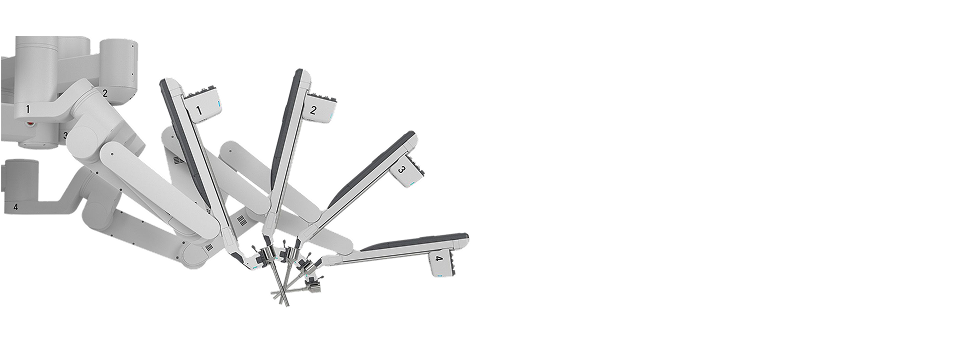
Advantages of robotic surgery
Surgical precision and control of movements
Robotic technology allows the surgeon to:
- perform extremely fine and stable manoeuvres
- operate without natural hand tremor
- maintain full control in narrow and anatomically demanding pelvic spaces
This is particularly important in complex gynaecological and oncological procedures.
High-definition three-dimensional vision
The magnified three-dimensional image allows:
- better identification of nerves and blood vessels
- safer tissue dissection
- more accurate excision of pathological lesions
Improved visualisation contributes to a reduction in complications.
Reduced surgical trauma
Compared with open surgery, the robotic approach:
- is performed through small incisions
- causes less damage to surrounding tissues
- reduces blood loss
This results in a smoother postoperative course.
Faster recovery and shorter hospital stay
Most patients benefit from:
- less postoperative pain
- earlier mobilisation
- shorter hospital stay
- faster return to daily activities
Improved cosmetic outcome
The small incisions used in robotic surgery result in:
- less visible scars
- improved cosmetic outcome
- increased patient satisfaction
Particular value in complex and demanding cases
Robotic surgery offers significant advantages in:
- obese patients
- reoperative surgery with adhesions
- deep endometriosis
- oncological procedures requiring precision and extensive dissection
Individualised selection of the appropriate surgical approach
Despite its advantages, robotic surgery does not replace all other surgical methods.
The correct choice is based on:
- the nature of the condition
- the patient’s anatomical characteristics
- the experience of the surgical team
An individualised approach remains crucial for the final outcome.